Editorial method
Who makes this, how, and why
YoriPrep Editorial focuses each guide on one operating decision a food-service team can use on its next shift.
- Reference material only
- This article is general operating reference material.
- Case scope
- This reference scope is limited to the operating question and illustrative case described in “Restaurant margin calculator: what really remains from a 10,000 KRW order?”.
- Calculation limits
- The review formula is “Food cost including yield loss is 3,200 or 32%. Contribution after food and order-variable channel, payment, and packaging cost is 5,600 or 56%.”; it does not determine a store-specific result without current inputs and context.
- Date markers from linked sources
- 3 linked sources state no date. Undated sources are not treated as current; check each link for its present status.
- Professional decisions
- Tax, employment, food-safety, accounting, and legal decisions need current official guidance or advice from an appropriate qualified professional. This article has not received that professional review.
- Publisher
- YoriPrep Editorial at Uberion selects the topic and is responsible for the scope of sources and examples in each article.
- Method
- Public sources are linked directly, and unsourced figures, percentages, and situations are labelled as illustrative. AI may assist drafting or translation, but advertising is limited to source-checked, curated articles.
- Purpose
- We publish to help readers solve one cost, stock, prep, or team-operations problem, not to mass-produce pages for search traffic.
A useful margin calculation follows one order from revenue through usable yield, channel costs, labor, and allocated overhead, then checks that costs plus operating margin close back to revenue.
Profitability · cost · inventory
Restaurant margin calculator: what really remains from a 10,000 KRW order?
Illustrative scenario only; it is not customer performance, a forecast, a closure prediction, or a guarantee.- Research date
- 2026-07-28
- A 10,000 KRW worked example
- 10,000 KRW
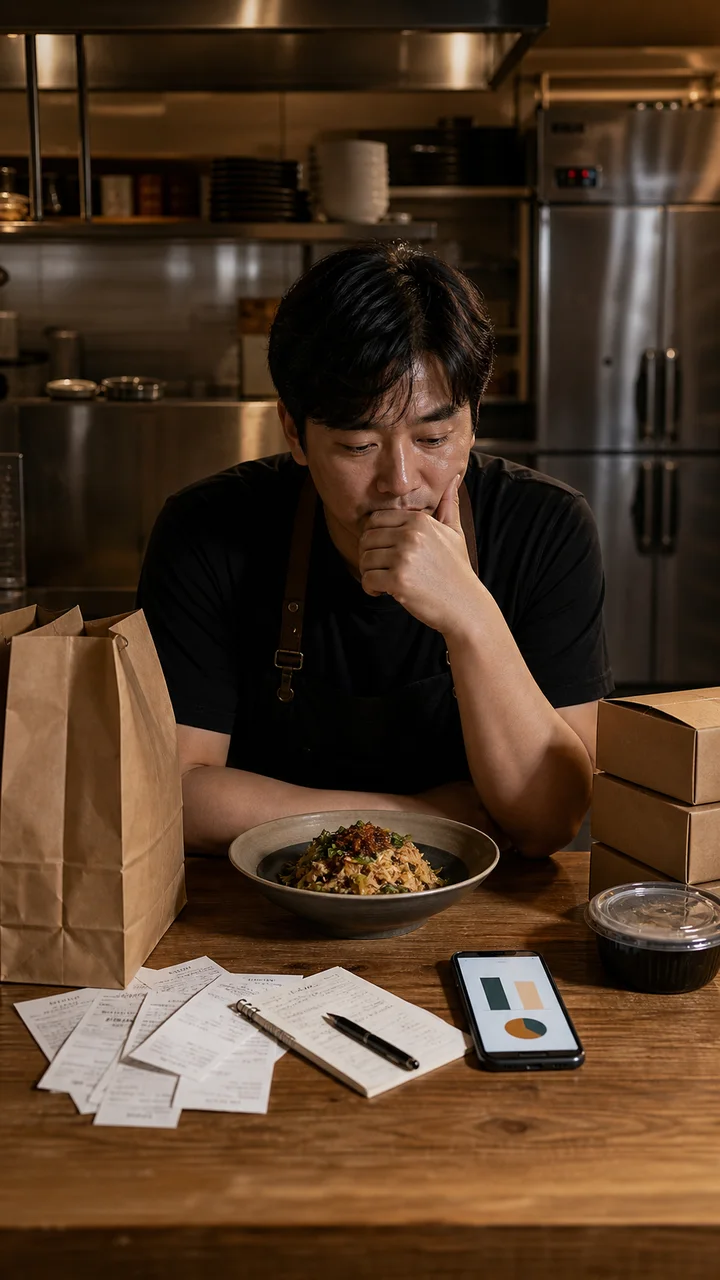
The mobile searcher usually wants an immediate answer for one menu item or delivery order, not an accounting lecture. Inputs must keep food, yield loss, channel, payment, packaging, labor, and fixed cost visible.
Replace this illustrative model with the restaurant’s own invoices, settlement statements, payroll, leases, and tax treatment; the example is not a performance promise.
1 · A 10,000 KRW worked example
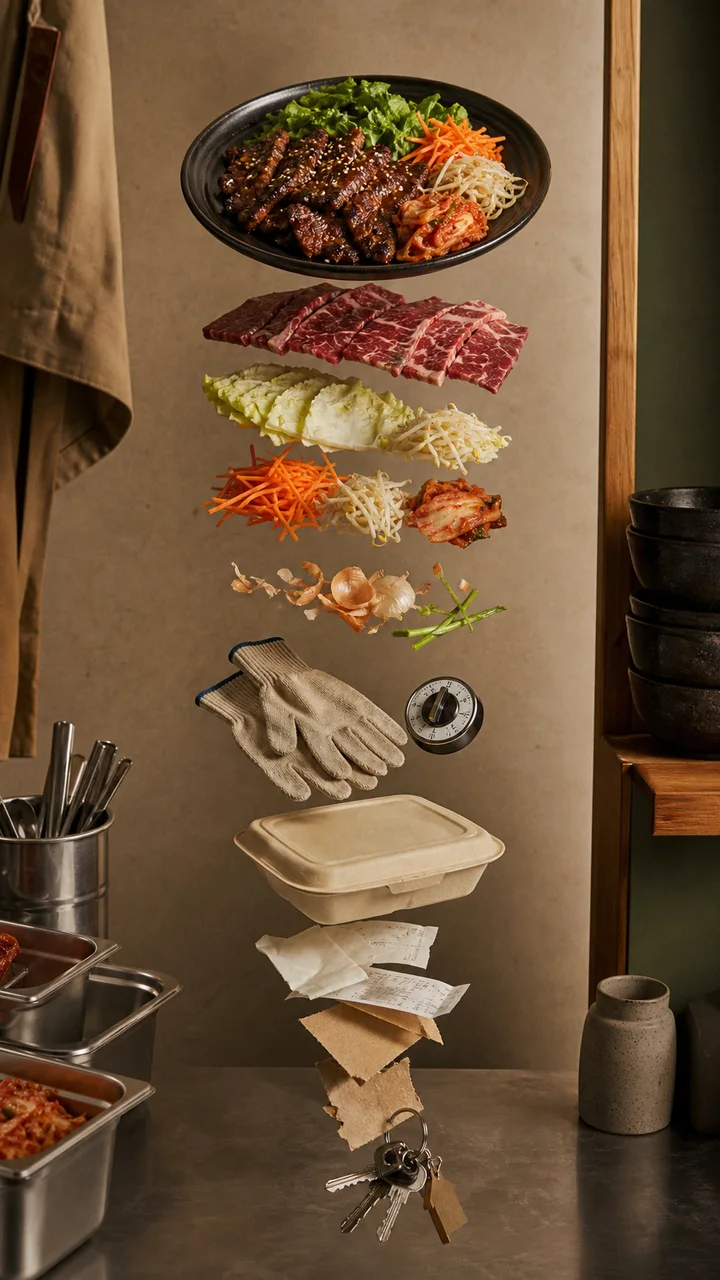
From 10,000 KRW revenue subtract 2,800 food purchase, 400 yield loss, 1,200 delivery channel, payment and packaging, 2,300 labor, and 1,500 allocated fixed cost. The operating margin is 1,800 KRW, or 18%.
The cost total is 8,200 and 8,200 plus 1,800 closes exactly to 10,000. That closure test exposes omitted or double-counted costs.
Food cost including yield loss is 3,200 or 32%. Contribution after food and order-variable channel, payment, and packaging cost is 5,600 or 56%.
2 · Audit inventory units before counts
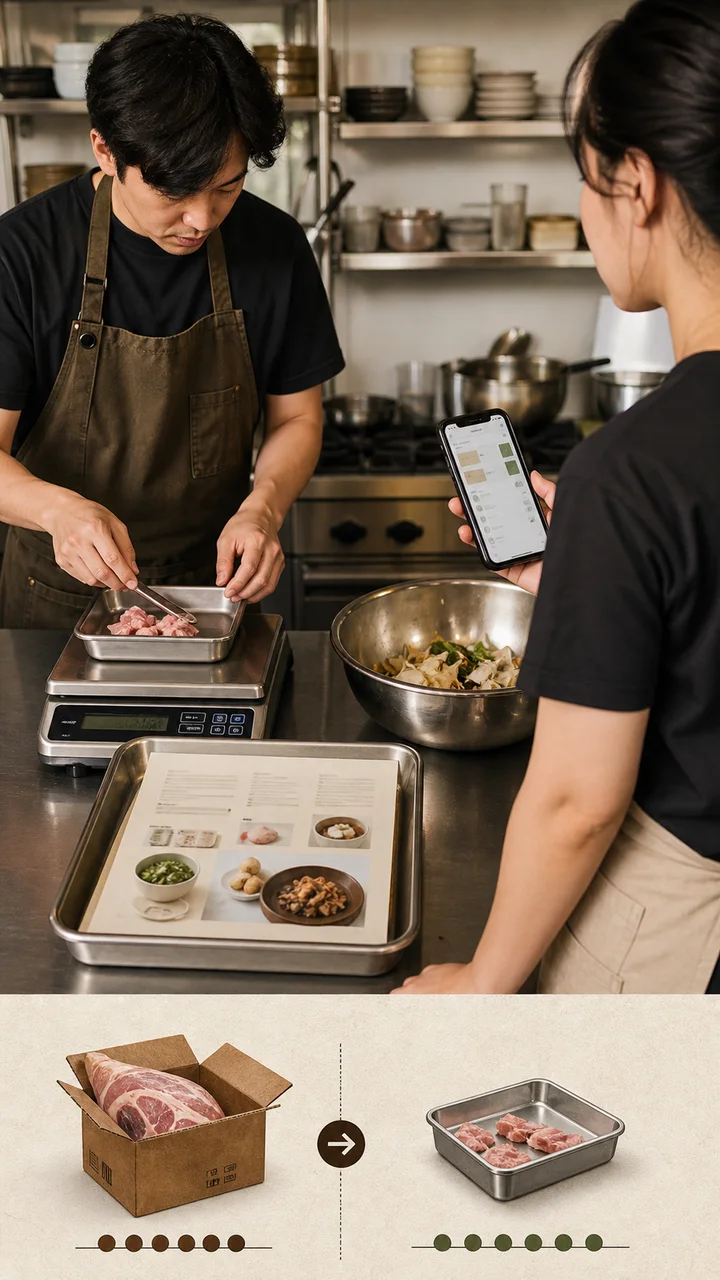
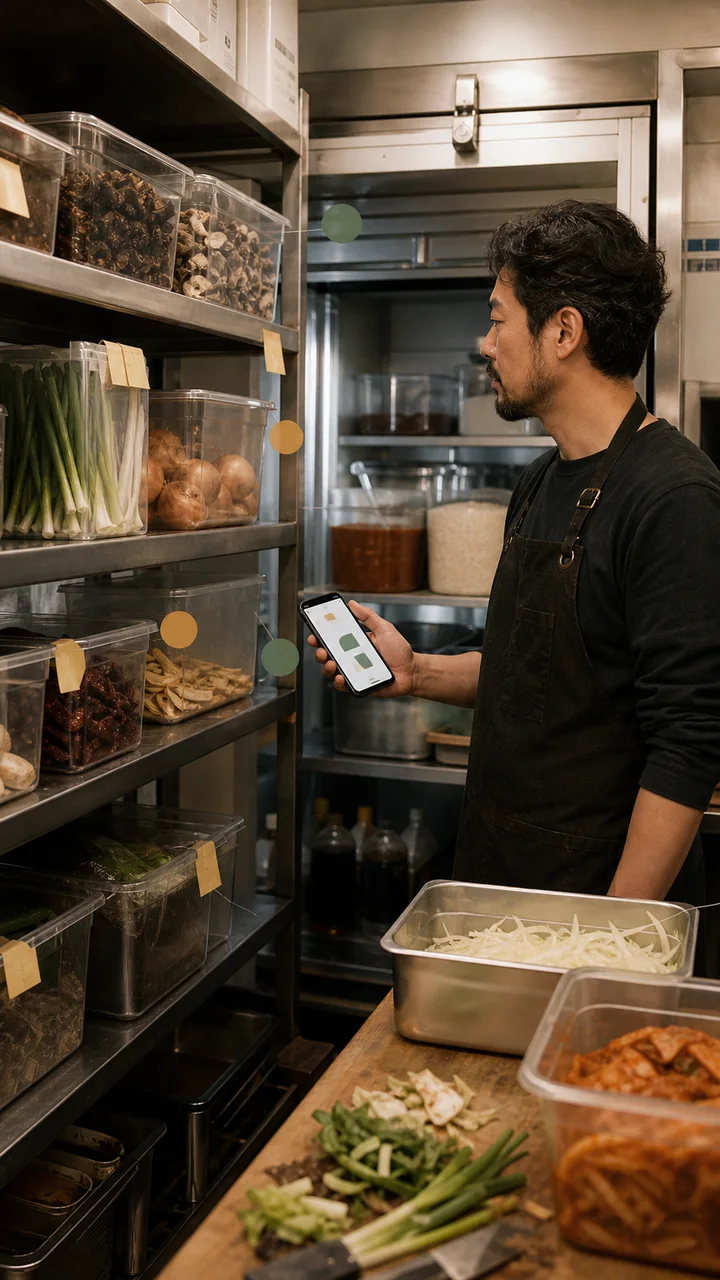
A case on the purchase order, kilograms at receiving, trimmed grams in a recipe, and containers at stocktake are different units. Lock a conversion table for case weight, usable yield, portion, and count.
Unit and count mismatches create false cost inflation and false shortages. Recalculate menu cost from usable-yield cost rather than assuming purchase weight is edible weight.
Unit and count mismatches create false cost inflation and false shortages. Recalculate menu cost from usable-yield cost rather than assuming purchase weight is edible weight.
3 · Early warnings and a reproducible keyword method
YoriPrep does not claim automatic channel-fee imports. Verify the actual contract and settlement, then record the checked sales and costs for comparison.
Falling contribution alongside repeated waste, rising inventory days, unit mismatches, overtime, or delayed payments can raise review priority; no single signal predicts or guarantees closure.
Use the public Naver Search Ads portal as an entry point to query margin, food-cost, and delivery-fee seeds in your own account, then group related terms by intent. Account-specific results are private and are not cited here as public evidence; they also do not establish organic SEO difficulty, actual CTR, or age demographics.
Match the restaurant margin calculator intent
The mobile searcher usually wants an immediate answer for one menu item or delivery order, not an accounting lecture. Inputs must keep food, yield loss, channel, payment, packaging, labor, and fixed cost visible.
Replace this illustrative model with the restaurant’s own invoices, settlement statements, payroll, leases, and tax treatment; the example is not a performance promise.
A 10,000 KRW worked example
From 10,000 KRW revenue subtract 2,800 food purchase, 400 yield loss, 1,200 delivery channel, payment and packaging, 2,300 labor, and 1,500 allocated fixed cost. The operating margin is 1,800 KRW, or 18%.
The cost total is 8,200 and 8,200 plus 1,800 closes exactly to 10,000. That closure test exposes omitted or double-counted costs.
A 10,000 KRW worked example
From 10,000 KRW revenue subtract 2,800 food purchase, 400 yield loss, 1,200 delivery channel, payment and packaging, 2,300 labor, and 1,500 allocated fixed cost. The operating margin is 1,800 KRW, or 18%.
A 10,000 KRW worked example
A 10,000 KRW worked example
Food cost including yield loss is 3,200 or 32%. Contribution after food and order-variable channel, payment, and packaging cost is 5,600 or 56%.Food cost including yield loss is 3,200 or 32%. Contribution after food and order-variable channel, payment, and packaging cost is 5,600 or 56%.
Food cost including yield loss is 3,200 or 32%. Contribution after food and order-variable channel, payment, and packaging cost is 5,600 or 56%.
Only after subtracting 2,300 labor and 1,500 fixed-cost allocation does contribution become 1,800 operating margin, or 18%; always name the denominator and included costs.
The cost total is 8,200 and 8,200 plus 1,800 closes exactly to 10,000. That closure test exposes omitted or double-counted costs.
A 10,000 KRW worked example
- Food cost
- 2,800 KRW
- 28%
- Yield loss
- 400 KRW
- 4%
- Channel · payment · packaging
- 1,200 KRW
- 12%
- Labor
- 2,300 KRW
- 23%
- Fixed-cost allocation
- 1,500 KRW
- 15%
10,000 - 2,800 - 400 - 1,200 - 2,300 - 1,500 = 1,800 KRWOperating margin: 1,800 KRW (18%)Only after subtracting 2,300 labor and 1,500 fixed-cost allocation does contribution become 1,800 operating margin, or 18%; always name the denominator and included costs.
Illustrative scenario only; it is not customer performance, a forecast, a closure prediction, or a guarantee.
Food-cost rate, contribution, and operating margin
Food cost including yield loss is 3,200 or 32%. Contribution after food and order-variable channel, payment, and packaging cost is 5,600 or 56%.
Only after subtracting 2,300 labor and 1,500 fixed-cost allocation does contribution become 1,800 operating margin, or 18%; always name the denominator and included costs.
Audit inventory units before counts
A case on the purchase order, kilograms at receiving, trimmed grams in a recipe, and containers at stocktake are different units. Lock a conversion table for case weight, usable yield, portion, and count.
Unit and count mismatches create false cost inflation and false shortages. Recalculate menu cost from usable-yield cost rather than assuming purchase weight is edible weight.
Audit inventory units before counts
A case on the purchase order, kilograms at receiving, trimmed grams in a recipe, and containers at stocktake are different units. Lock a conversion table for case weight, usable yield, portion, and count.
A 10,000 KRW worked example
From 10,000 KRW revenue subtract 2,800 food purchase, 400 yield loss, 1,200 delivery channel, payment and packaging, 2,300 labor, and 1,500 allocated fixed cost. The operating margin is 1,800 KRW, or 18%.
Food cost
Yield loss
Channel · payment · packaging
Labor
Fixed-cost allocation
Operating margin
Illustrative scenario only; it is not customer performance, a forecast, a closure prediction, or a guarantee.
Delivery-fee intent is mobile intent
A person searching on a phone wants to enter order value, channel commission, payment fee, promotion share, and packaging quickly. Keeping them separate shows which contract term changed.
YoriPrep does not claim automatic channel-fee imports. Verify the actual contract and settlement, then record the checked sales and costs for comparison.
Early warnings and a reproducible keyword method
Falling contribution alongside repeated waste, rising inventory days, unit mismatches, overtime, or delayed payments can raise review priority; no single signal predicts or guarantees closure.
Use the public Naver Search Ads portal as an entry point to query margin, food-cost, and delivery-fee seeds in your own account, then group related terms by intent. Account-specific results are private and are not cited here as public evidence; they also do not establish organic SEO difficulty, actual CTR, or age demographics.
Early warnings and a reproducible keyword method
A person searching on a phone wants to enter order value, channel commission, payment fee, promotion share, and packaging quickly. Keeping them separate shows which contract term changed.
Source library
Source library
Falling contribution alongside repeated waste, rising inventory days, unit mismatches, overtime, or delayed payments can raise review priority; no single signal predicts or guarantees closure.Naver Search Ads portal
NAVER
The public Naver Search Ads portal is an entry point where operators can reproduce seed-keyword and related-term research using their own account conditions. Account-specific results are private and are not cited here as public evidence; they do not establish organic SEO difficulty, actual CTR, or age demographics.
View sourceFood Buying Guide for Child Nutrition Programs
USDA Food and Nutrition Service
The guide provides a structure for distinguishing purchase quantity from servings or usable quantity. It is a US child-nutrition reference, not the actual yield or cost of a Korean restaurant; measure the specific product and process.
View sourcePromoting apps with smart app banners
Apple Developer Documentation
The documentation supports the web-to-App-Store Smart App Banner handoff. It is used only for mobile handoff and does not establish conversion rate, app performance, or product capability.
View source
Continue the review in YoriPrep
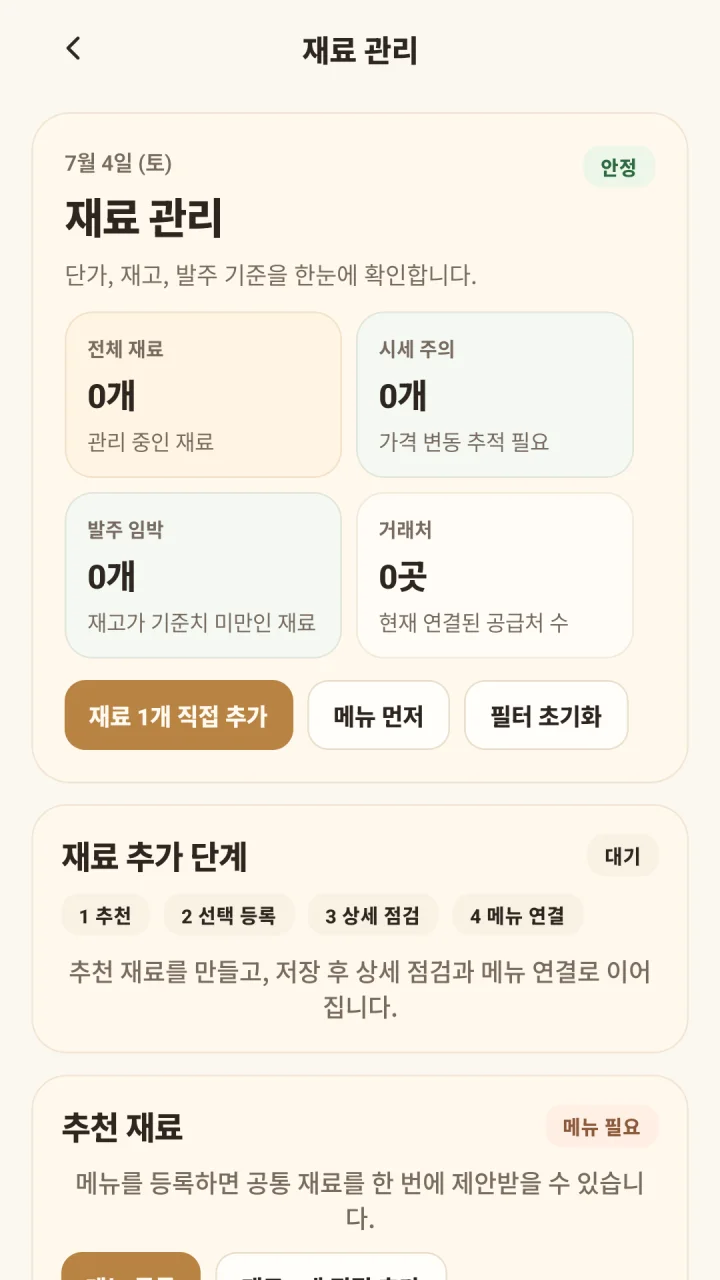
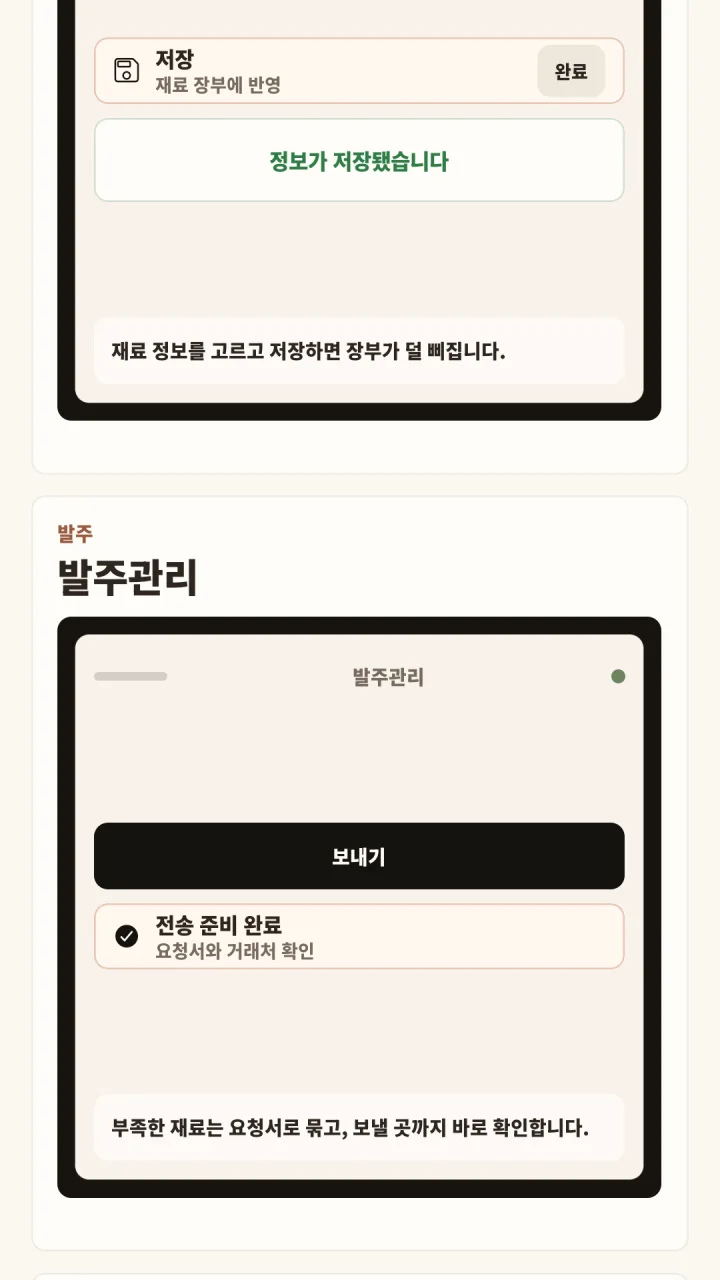
In the YoriPrep app, record sales, maintain ingredient and recipe costs, review prep and labor, and set goals or compare periods; operators retain the final decision.
- Food-cost rate, contribution, and operating margin
Food cost including yield loss is 3,200 or 32%. Contribution after food and order-variable channel, payment, and packaging cost is 5,600 or 56%.
- Audit inventory units before counts
Unit and count mismatches create false cost inflation and false shortages. Recalculate menu cost from usable-yield cost rather than assuming purchase weight is edible weight.
- Early warnings and a reproducible keyword method
Use the public Naver Search Ads portal as an entry point to query margin, food-cost, and delivery-fee seeds in your own account, then group related terms by intent. Account-specific results are private and are not cited here as public evidence; they also do not establish organic SEO difficulty, actual CTR, or age demographics.