YoriPrep operator notes
Answers you can use on the next shift.
Practical guidance for food cost, stock, menus, and team handoffs—without the management jargon.
PRIVATE OPERATOR DESKContinue with an operator questionLeave the issue slowing today’s service and YoriPrep AI will prepare a reply draft.PUBLIC AI CONSULTATIONS
Kitchen operations Q&A
Read 24 illustrative questions and answers prepared by YoriPrep Editorial.
The writing form saves only a browser-local draft and does not send a question.
24 editorial scenarios
This Q&A is an illustrative editorial scenario. MrDog and Miss Sweet Lemon are fictional editorial personas, not human professionals. Check current official or professional guidance when relevant.
- 01
Can a menu-board photo become our QR menu right away?
We changed prices for the seasonal menu, but I do not have time to type the web menu again. Can I photograph the paper board and publish it straight to the guest QR menu?
- 02
Which menu margin moves first when one ingredient price changes?
Our supplier replaced the same cheese with a smaller case, so the case price fell but the real unit cost seems higher. How can I quickly find which menu items need attention first?
- 03
Can yesterday’s sales show today’s prep order?
We record sales by menu at close, but every morning we still debate what to prep first. What else is needed to turn sales records into today’s prep order?
24 editorial scenarios
Two public boards
Operator community
Live member conversations organized by country and restaurant-operations topic.
Loading recent conversations…
Open the community boardLatest field notes
19 articles

Restaurant break-even point calculator: units, sales, and the capacity check
Calculate break-even units from fixed costs and per-unit contribution, then calculate break-even sales from the contribution-margin ratio while testing menu mix, capacity, and seasonality.
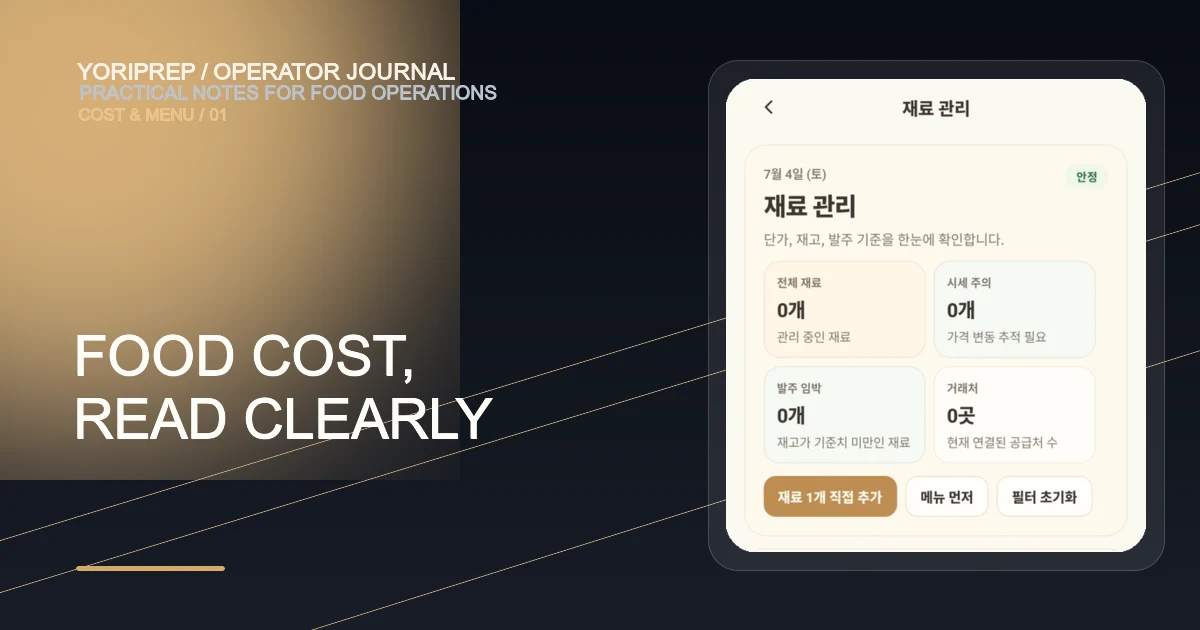
Menu contribution margin calculator: combine profit per item with popularity
Calculate contribution margin per menu item and total contribution from units sold, then compare contribution with popularity instead of ranking dishes by food-cost percentage alone.
Restaurant food-cost percentage: what belongs in the calculation?
Use a period formula, usable yield, and a consistent denominator before comparing restaurant food cost.

Delivery-app fees in Korea: calculate contribution per order
Separate channel, payment, promotion, VAT, packaging, and food costs so delivery contribution is not mistaken for net profit.

Seven evidence-backed limitations of restaurant inventory spreadsheets
A spreadsheet is a valid starting tool, but seven control gaps need operating rules.
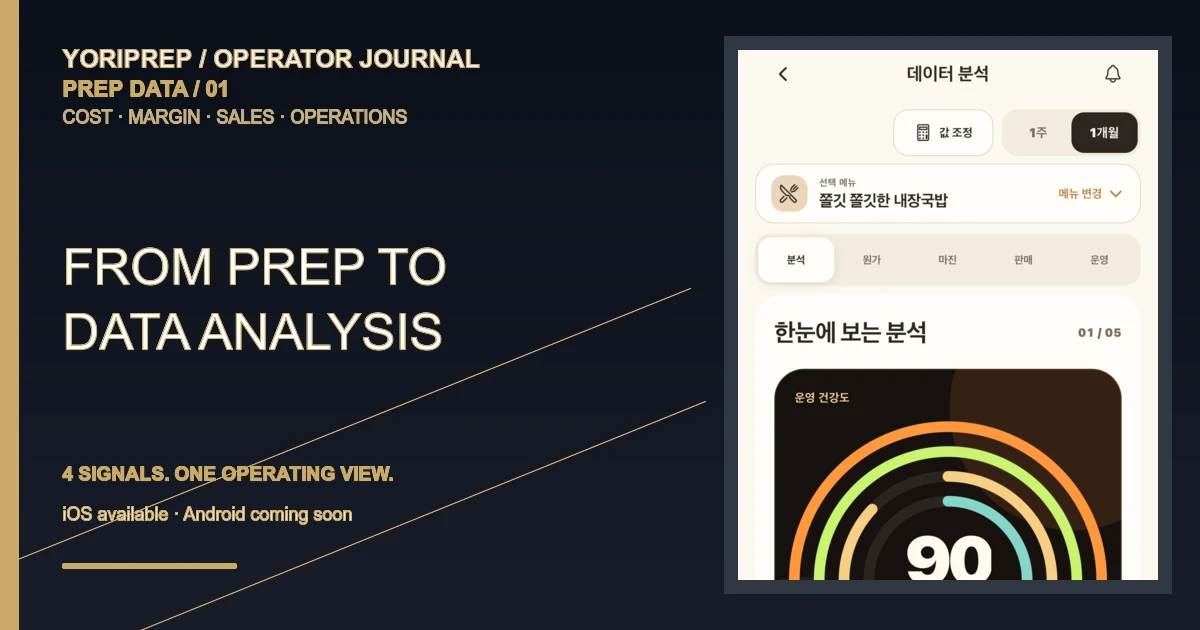
Prep data analysis: read cost, margin, sales, and operations together
A guide to YoriPrep’s Prep > Data Analysis screen, where menu cost rate, margin rate, sales pace, workload concentration, and money flow share one view. YoriPrep is available on iOS and Android.
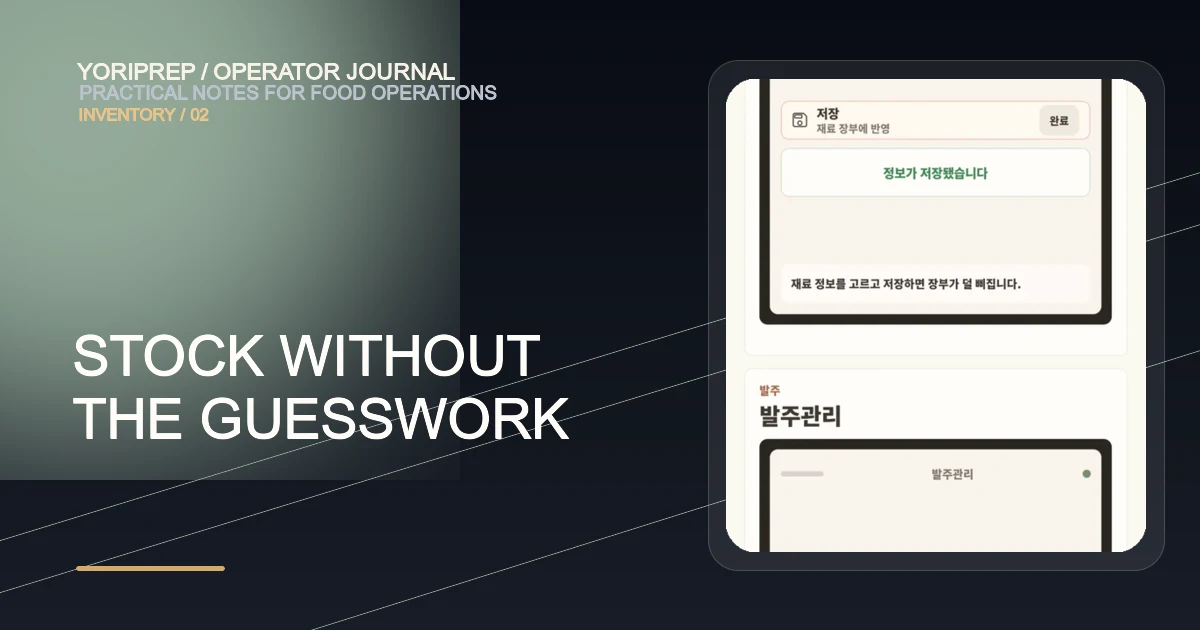
How much should a restaurant prep? A practical system for waste, stockouts, and handoffs
A detailed answer to the recurring operator questions about par levels, usable on-hand stock, waste, labeling, ownership, and the YoriPrep workflow that connects them.
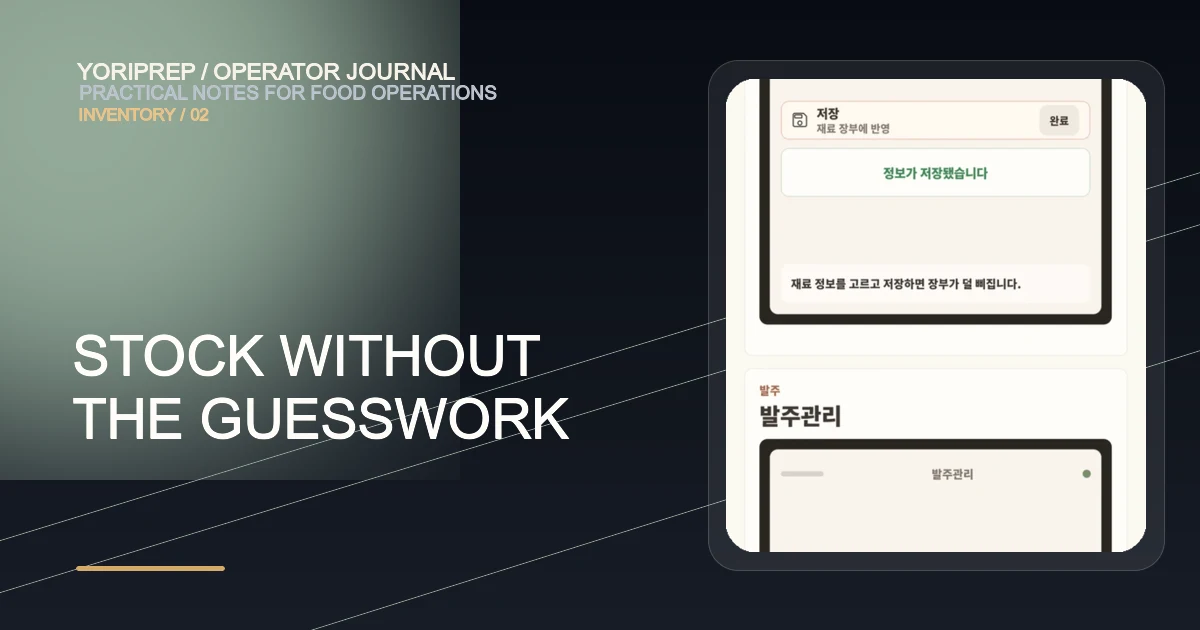
A ten-minute daily stock and ordering routine
Count the items that create stockouts and waste before trying to count everything.
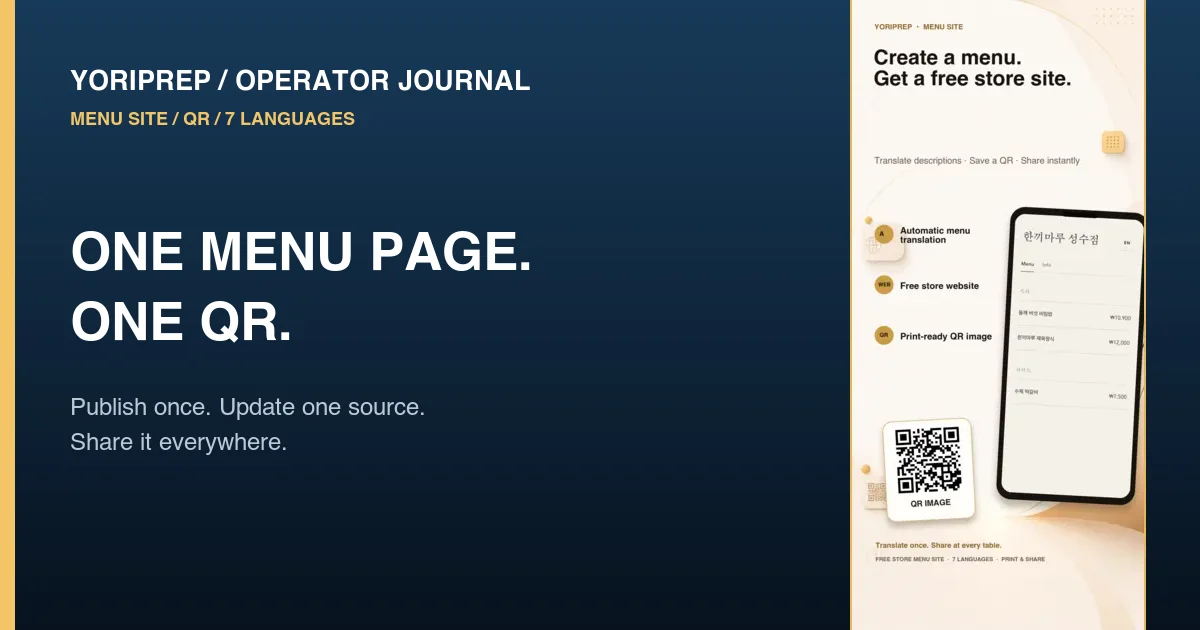
Why every restaurant needs a website and a QR menu
A practical guide to owning one current menu page, using QR codes effectively, avoiding common guest frustrations, and publishing it with YoriPrep.
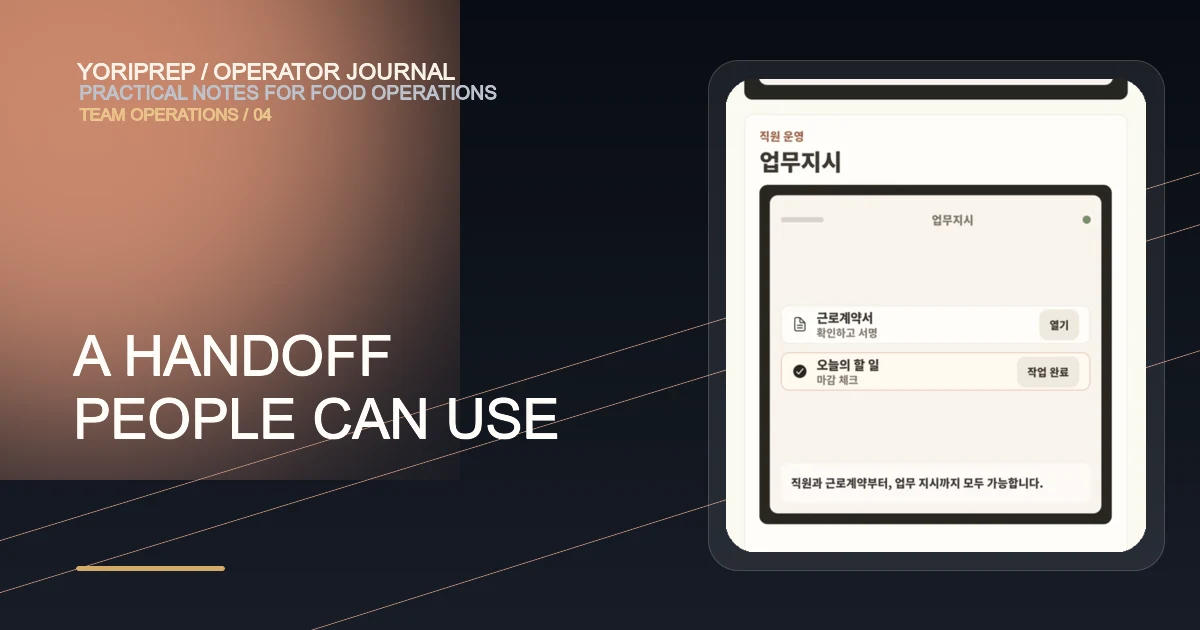
A restaurant shift handoff checklist people can act on
Separate status, problem, and owner so the next shift can move without another meeting.
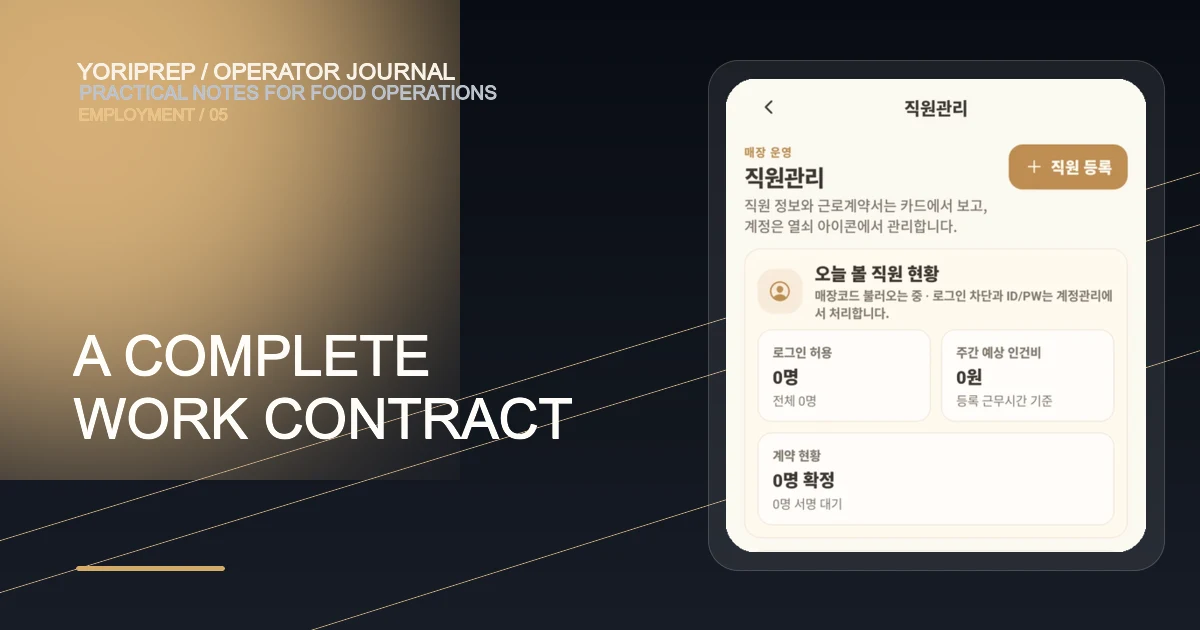
What a Korean employment contract must include: a restaurant operator’s checklist
A fictional dispute shows how to document pay, hours, breaks, holidays, duties, and contract periods without gaps.
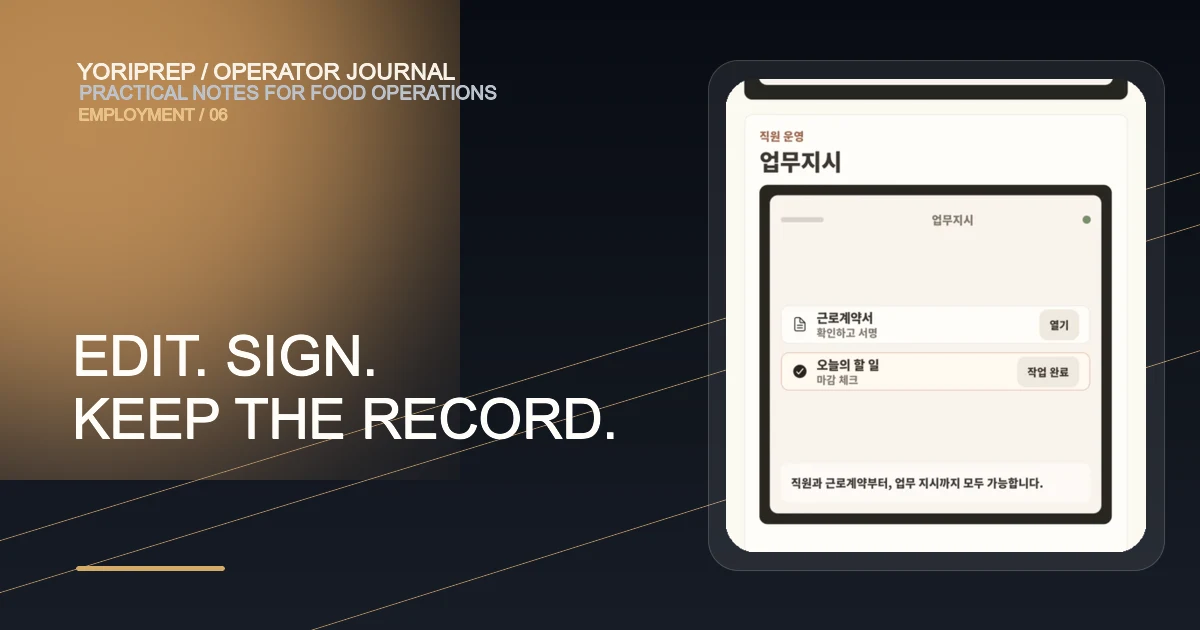
From correction request to signatures and retention: the YoriPrep contract workflow
A detailed flow for drafts, worker corrections, manager edits, signatures, final locking, delivery, and three-year retention in Korea.

Can AI set tomorrow’s prep? Build this 14-day baseline first
A practical way to connect sales, reservations, stockouts, waste, weather, and exceptions before judging whether an AI prep forecast actually improves the operation.

When vegetables, oil, and beef move in different directions, how should prep change?
Use the actual high-impact ingredients in your menu—not one broad food-cost average—to adjust prep batches, ordering, portions, and waste exposure.

For summer batch prep, calculate cooling capacity before you start cooking
A practical plan for soups, sauces, and cooked proteins that connects shallow pans, split batches, time-and-temperature records, and refrigeration capacity.

Beyond a single score: reading prep performance through five report views
A practical guide to moving among the overview, cost, margin, sales, and operations views in the YoriPrep development preview without mistaking an illustrative score for a business result.
From items sold to prep workload: why batch yield and standard minutes matter
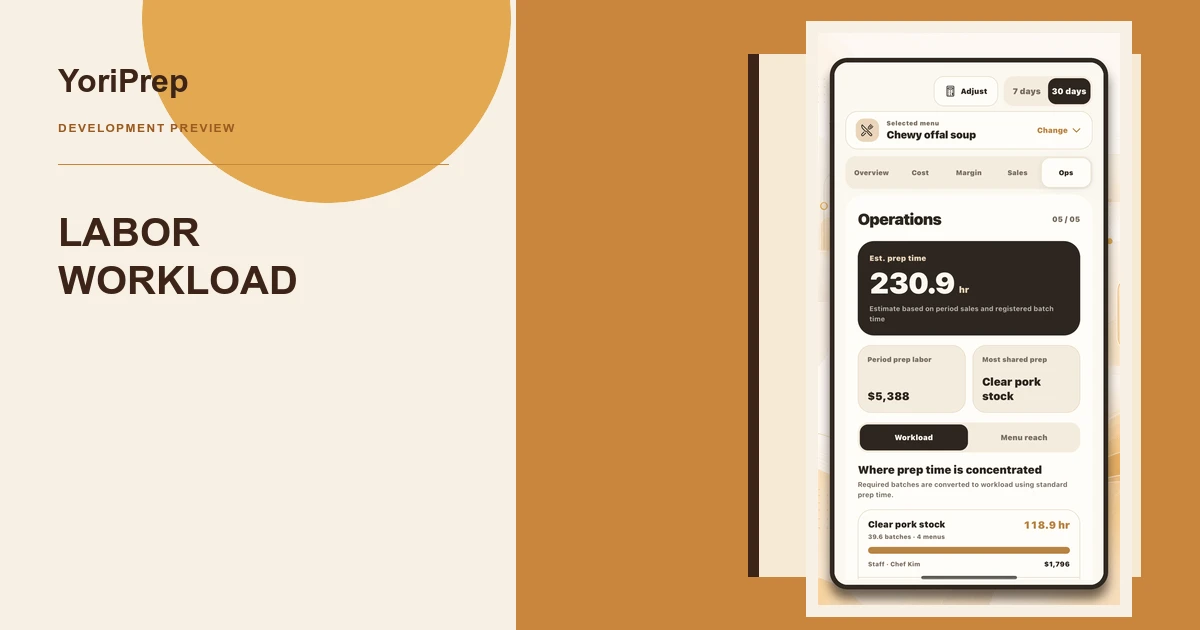
How sales quantity, prep quantity per item, batch output, and standard minutes combine into a period workload estimate—and how linked menus and assigned staff help operators review it.

From AI chat to a sales record: four checkpoints, no passive saving
The development-preview flow from a chat request to an editable amount, positive-number validation, and an explicit save action controlled by the operator.
Editorial method
Who makes this, how, and why
YoriPrep Editorial focuses each guide on one operating decision a food-service team can use on its next shift.
- Publisher
- YoriPrep Editorial at Uberion selects the topic and is responsible for the scope of sources and examples in each article.
- Method
- Public sources are linked directly, and unsourced figures, percentages, and situations are labelled as illustrative. AI may assist drafting or translation, but advertising is limited to source-checked, curated articles.
- Purpose
- We publish to help readers solve one cost, stock, prep, or team-operations problem, not to mass-produce pages for search traffic.