Editorial method
Who makes this, how, and why
YoriPrep Editorial focuses each guide on one operating decision a food-service team can use on its next shift.
- Reference material only
- This article is general operating reference material.
- Case scope
- This reference scope is limited to the operating question and illustrative case described in “A restaurant shift handoff checklist people can act on”.
- Calculation limits
- The review formula is “The model below is an illustrative management aid for critical exceptions. It makes missing ownership or acknowledgement visible without pretending every handoff has equal risk.”; it does not determine a store-specific result without current inputs and context.
- Date markers from linked sources
- Years stated by the linked sources: 2026 · 2023. Undated sources are not treated as current; check each link for its present status.
- Professional decisions
- Tax, employment, food-safety, accounting, and legal decisions need current official guidance or advice from an appropriate qualified professional. This article has not received that professional review.
- Publisher
- YoriPrep Editorial at Uberion selects the topic and is responsible for the scope of sources and examples in each article.
- Method
- Public sources are linked directly, and unsourced figures, percentages, and situations are labelled as illustrative. AI may assist drafting or translation, but advertising is limited to source-checked, curated articles.
- Purpose
- We publish to help readers solve one cost, stock, prep, or team-operations problem, not to mass-produce pages for search traffic.
A handoff should be a task list the next person can acknowledge, not a paragraph they have to interpret.
Consulting case · A message is not yet a handoff
The note everyone read and nobody owned
This is a composite consulting case reconstructed from the public materials cited below and illustrative store data. It is not a named customer story, and none of the figures are a reported YoriPrep result.- Illustrative operation
- All-day restaurant with opening, swing, and closing teams
- Question under review
- One low-stock exception carried from close to opening
- Observed symptom
- Message acknowledged in chat; action missed before lunch
- Decision boundary
- Task-relevant state, next action, owner, deadline, and acknowledgement
“The closer wrote ‘onions low’ in the team chat and the opener saw it. Why are we calling this a handoff failure?”
Because visibility is not transfer of responsibility. The incoming shift needs to know the current state, the consequence if nothing changes, the next observable action, who owns it, and when it must be checked. Then the receiver must confirm the task, not merely the message.
Phase 1 · Rewrite description as operational state
“Onions low” could mean two bags, two portions, or no usable stock. We rewrote it as: “Two sealed bags remain; lunch forecast requires five; delivery of three bags is expected by 10:30.” The incoming person can now compare reality with the statement.
The handoff should exclude background that does not change the next shift’s work. Concision comes from selecting task-relevant information, not from deleting quantities and deadlines.
The original message described concern but not a verifiable current state.
Phase 2 · Convert concern into one observable action
The next action became: “At 10:30, verify receipt; if absent, call the backup supplier before 10:40.” This creates a branch the receiver can execute without guessing what the closer intended.
We did not add a long checklist for every routine duty. The handoff focuses on exceptions, unfinished work, changed conditions, and decisions that cross the shift boundary.
The note transmitted information but no executable response to a missed delivery.
Phase 3 · Transfer ownership with read-back
The opener was assigned by name and acknowledged the specific action and time. A thumbs-up reaction would confirm visibility but not shared understanding. Read-back can be short: “I own the 10:30 receipt check and backup call if it is late.”
This mirrors a broader human-factors principle: the sender and receiver share responsibility for accurate transfer. The restaurant adapts that principle to its lower-risk context without claiming that restaurant work is equivalent to healthcare or process safety.
No person had explicitly accepted responsibility for the time-bound action.
Phase 4 · Measure closure, not message volume
We tracked only critical handoff items: accepted on time, completed by deadline, or escalated before impact. Longer chat histories and more messages are not evidence of a safer handoff.
When the same exception repeats, it should move upstream into a par rule, supplier process, prep standard, or opening checklist. Otherwise the team becomes efficient at transferring a preventable problem.
The restaurant measured communication activity, while the missing control was accountable task closure.
Animated formula sequence
Score the transfer, not the length of the note
The model below is an illustrative management aid for critical exceptions. It makes missing ownership or acknowledgement visible without pretending every handoff has equal risk.Each component answers a different question the incoming shift would otherwise need to infer.
Acknowledgement means the receiver confirms the action and responsibility, not only that the message was opened.
Use this only for comparable critical items and investigate misses rather than rewarding message volume.
A timely escalation can be a successful control when the original action becomes impossible.
Illustrative closing-to-opening transfer
- Critical items handed over
- 5
- Only exceptions with service, safety, or guest impact.
- Accepted before deadline
- 4
- Receiver confirmed the specific action and time.
- Completed on time
- 3
- Observable action finished by the agreed deadline.
- Escalated on time
- 1
- Owner raised the blocked task before service impact.
Transfer: 4 ÷ 5 × 100; closed loop: (3 + 1) ÷ 4 × 10080% illustrative on-time transfer; 100% closed loop among accepted itemsThe strong closed-loop result does not erase the unaccepted fifth item. The review asks why it lacked acknowledgement and whether its owner or deadline was ambiguous.
Illustrative operational metric, not a safety certification or validated industry benchmark. High-risk food-safety, medical, equipment, or legal issues require the restaurant’s formal procedures and qualified supervision.
Illustrative handoff board at shift change
The sample view separates closed, active, and blocked work so the next shift can focus on exceptions instead of rereading every routine task.
Illustrative set prepared for the receiving shift.
Illustrative completed items that need acknowledgment, not more work.
Illustrative open items with an owner and next check time.
Illustrative exceptions waiting on a supplier, manager, equipment response, or another dependency.
Illustrative scenario only — the field count, action count, status totals, deadlines, and chart values below are sample handoff data, not customer results or staffing benchmarks.
Public evidence desk
Why preparation, two-way transfer, written support, and acknowledgement matter
The cited sources come from process safety, healthcare teamwork, and restaurant operations. Their shared communication principles are adapted carefully; their sector-specific outcomes are not presented as restaurant performance evidence.Shift handover
UK Health and Safety Executive
HSE describes effective handover as preparation, communication of task-relevant information, and incoming cross-checking, with verbal and written support and shared responsibility. The guidance focuses on safety-critical industry. A restaurant should adapt the communication principles proportionately rather than imply equivalent hazard or regulation.
View sourceTeamSTEPPS Tool: Handoff
Agency for Healthcare Research and Quality
The tool emphasizes structured handoff, receiver confirmation, and designing a checklist around the team’s information needs. It is designed for healthcare teams. This article borrows communication structure, not clinical procedure or evidence of restaurant outcomes.
View sourceDaily Task List: A Guide for Restaurant Operators
Restaurant365
The guide frames opening, shift, and closing work as structured responsibilities and identifies communication between shifts as a practical use of task lists. This is vendor-authored guidance, not independent experimental evidence, and it does not validate the illustrative rates used in this case.
View source
Make the next shift inherit a task, not a paragraph
YoriPrep can keep the exception, current state, owner, deadline, acknowledgement, and closure together. The system supports the transfer; it cannot guarantee that a person understands or performs the work.
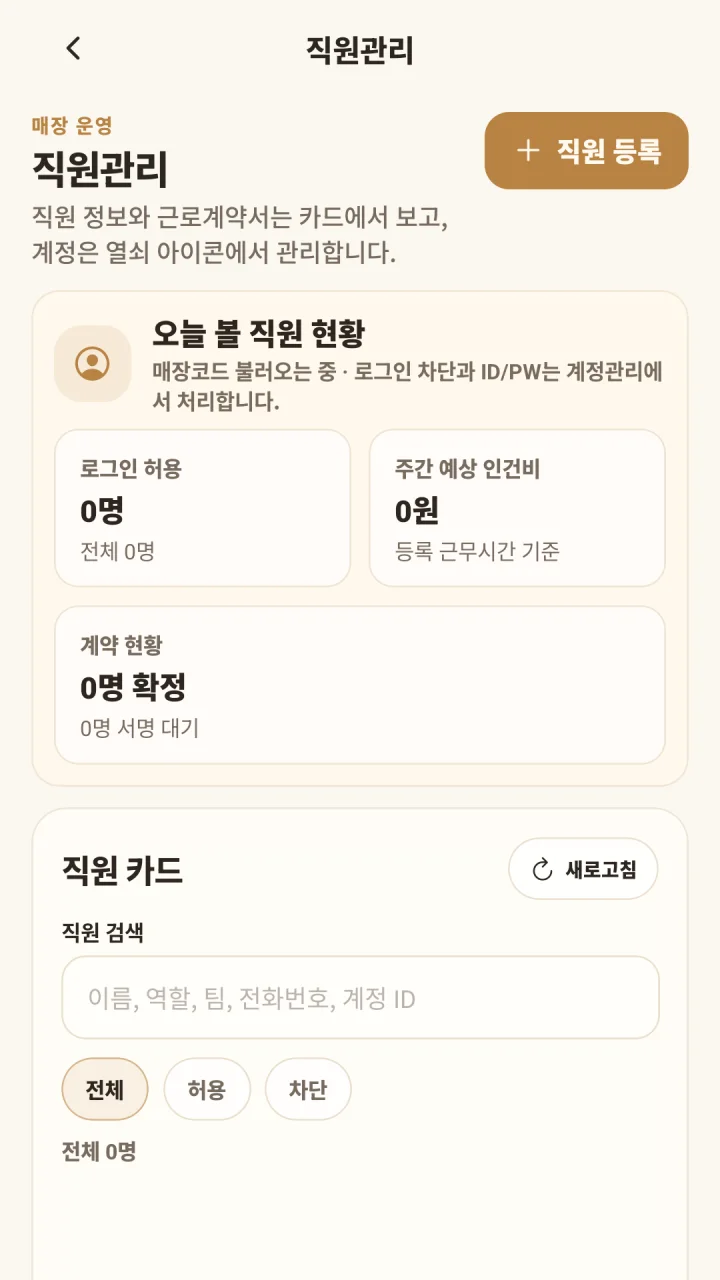
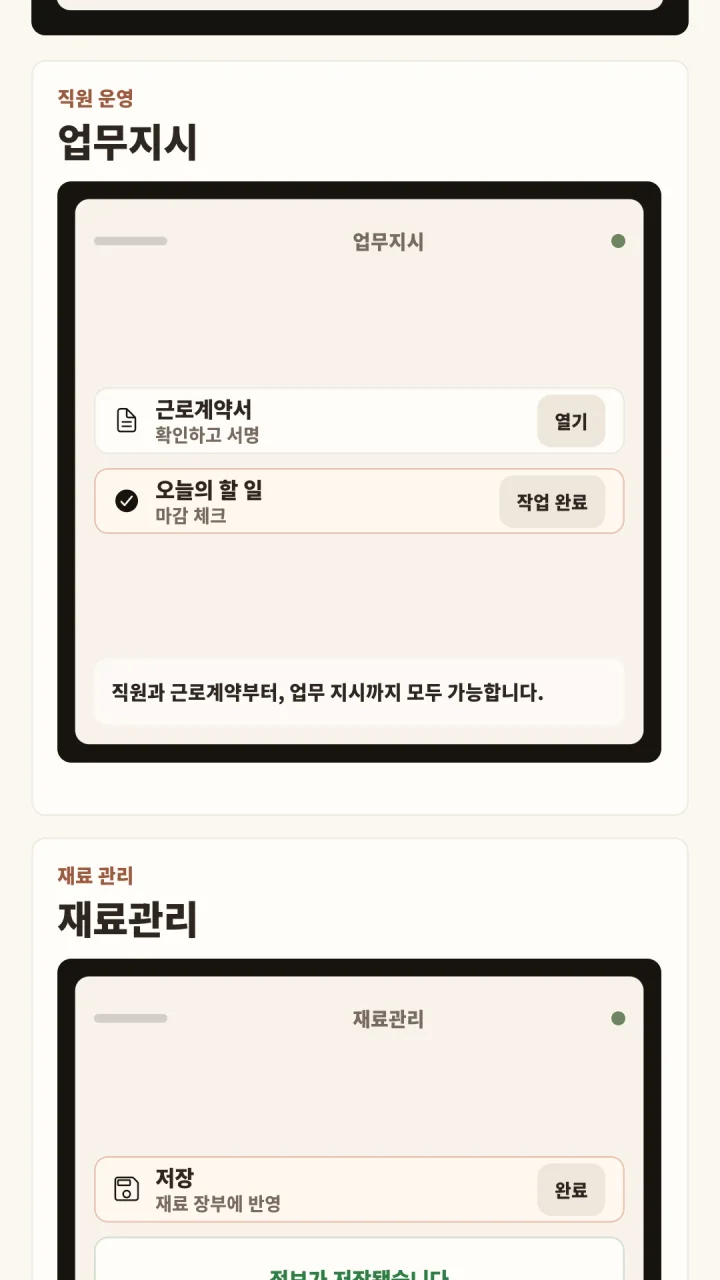
- Create the exception from the real work area
Record the current quantity or condition, the expected operational consequence, and supporting context such as a delivery or prep status.
- Write one observable next action
State what must be checked or completed, by whom, and by what time; include the escalation branch when the expected event fails.
- Assign and request acknowledgement
Send the item to one incoming owner and require confirmation of the action and deadline rather than a generic read receipt.